
Politics
Iraq and the Geopolitical Conflicts in the Middle East
Repercussions on Iraqi National Security
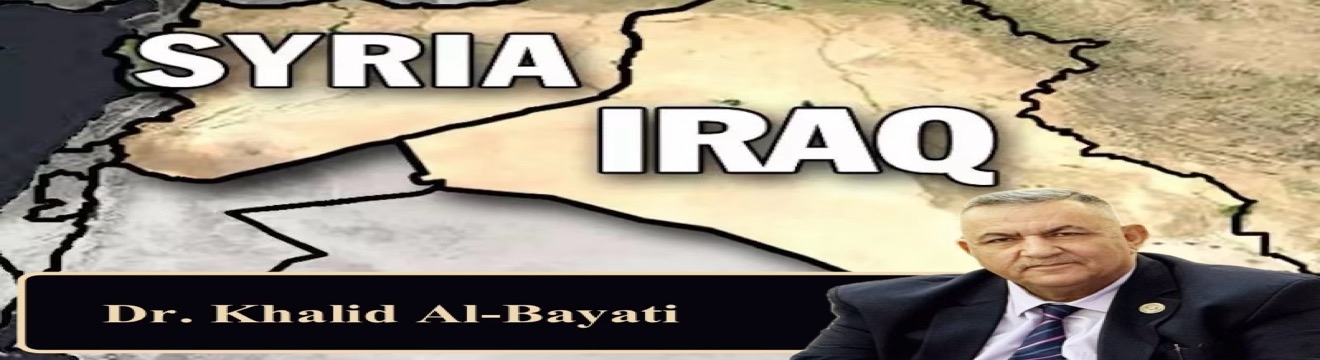
Dr. Khalid Al-Bayati / National Security Expert
USPA NEWS -
The sudden collapse of the regime in Damascus and the withdrawal of Iranian influence from Syrian territories represent a seismic geopolitical shift. Its impact is not limited to Syria's internal affairs but subjects Iraqi national security to a new existential test. A reading of the scene confirms that Syria, once a laboratory for the re-engineering of influence, has now become a primary source of strategic uncertainty on Iraq's western border.
This analysis is presented from the perspective of comprehensive national security, linking military, security, geopolitical, and economic factors to assess the structural repercussions of these new dynamics on Iraq.
This analysis is presented from the perspective of comprehensive national security, linking military, security, geopolitical, and economic factors to assess the structural repercussions of these new dynamics on Iraq.
The New Security Vacuum on the Western Border
In the wake of the regime's fall, the Syrian arena witnessed a rapid disintegration of the existing structures of authority and security. The security vacuum resulting from the withdrawal of Iranian influence, which constituted part of the extended "Security Belt," has not remained empty. Instead, it has become an arena for new competition and escalating risks.
In the wake of the regime's fall, the Syrian arena witnessed a rapid disintegration of the existing structures of authority and security. The security vacuum resulting from the withdrawal of Iranian influence, which constituted part of the extended "Security Belt," has not remained empty. Instead, it has become an arena for new competition and escalating risks.
First: The Renewed Threat of Terrorism: Strategic assessment indicates that the terrorist organization ISIS, which has transformed into a network of active cells operating on a "Swarm" model, will exploit the new security fluidity in the vast Syrian-Iraqi desert. This area has historically served as a natural sanctuary, and today, with the absence of the central Syrian force that controlled a part of the border, the risk of reconnecting the organizational links between the two countries is imminent, potentially dragging Iraq back into a cycle of violence.
Second: Expansion of Regional Influence: In light of the Iranian withdrawal, other regional powers, primarily Turkey, are expected to seek to expand their influence and security operations in northern and eastern Syria. This expansion, accompanied by demographic and economic projects, alters the nature of the land and its inhabitants, presenting Iraq with a new reality: an active regional military presence on its northern and western borders, further complicating the security landscape.
International Competition in a Changing Context
Despite the radical changes, international competition persists, albeit with different tools and objectives.
• The United States and Russia: The United States maintains its presence in the East of the Euphrates as a factor disrupting rival projects. Meanwhile, Russia, which was the main guarantor of the former regime, seeks to reposition itself to maintain its political and economic influence, especially concerning future reconstruction contracts. This competition, even with the change in active regional players, continues to cast a shadow over Iraq, which finds itself under conflicting pressures.
• The Zionist Entity: The systematic Israeli campaign that targeted Iranian military infrastructure in Syria may have achieved its goals with the withdrawal of those forces. However, this does not signify the end of the Israeli role; rather, its focus may shift to monitoring any attempts at repositioning or the emergence of new threats from the security vacuum.
Despite the radical changes, international competition persists, albeit with different tools and objectives.
• The United States and Russia: The United States maintains its presence in the East of the Euphrates as a factor disrupting rival projects. Meanwhile, Russia, which was the main guarantor of the former regime, seeks to reposition itself to maintain its political and economic influence, especially concerning future reconstruction contracts. This competition, even with the change in active regional players, continues to cast a shadow over Iraq, which finds itself under conflicting pressures.
• The Zionist Entity: The systematic Israeli campaign that targeted Iranian military infrastructure in Syria may have achieved its goals with the withdrawal of those forces. However, this does not signify the end of the Israeli role; rather, its focus may shift to monitoring any attempts at repositioning or the emergence of new threats from the security vacuum.
Repercussions on Iraqi National Security
The highest priority threat to Iraq lies in the continued fragility of its western border. This border, which is a vital security space, risks turning into an "Open Flank" through which all forms of non-traditional threats can pass.
More dangerously, there is the possibility of infringing upon Iraqi national sovereignty through the importation of regional conflicts. With the absence of the Syrian regime as a controlling party, attempts by regional and international actors to use Iraqi territory as an alternative arena or a pressure card in the broader conflict may increase. This infringement threatens internal political stability and weakens the Iraqi state's ability to make independent decisions that serve the supreme national interest.
The highest priority threat to Iraq lies in the continued fragility of its western border. This border, which is a vital security space, risks turning into an "Open Flank" through which all forms of non-traditional threats can pass.
More dangerously, there is the possibility of infringing upon Iraqi national sovereignty through the importation of regional conflicts. With the absence of the Syrian regime as a controlling party, attempts by regional and international actors to use Iraqi territory as an alternative arena or a pressure card in the broader conflict may increase. This infringement threatens internal political stability and weakens the Iraqi state's ability to make independent decisions that serve the supreme national interest.
Strategic Opportunities: Turning Challenges into Strength
Despite the risks, this geopolitical shift creates strategic opportunities for Iraq.
1 The Role of Regional Mediator: Iraq can leverage its position as a regional party that maintains working relations with almost all active parties (Kurdish forces, neighboring countries, international powers) to act as a mediator or facilitator for indirect dialogues, thereby elevating its regional diplomatic standing.
2 The Geoeconomic Hub: The opportunity to transform into a regional geoeconomic hub emerges through accelerating the development of the "Development Road Project," which connects the Grand Faw Port to the Syrian border. This strategic project will make Iraq a mandatory trade corridor for goods between Asia and Europe, granting it significant soft power and creating intertwined common interests that prevent the export of crises to its territory.
Despite the risks, this geopolitical shift creates strategic opportunities for Iraq.
1 The Role of Regional Mediator: Iraq can leverage its position as a regional party that maintains working relations with almost all active parties (Kurdish forces, neighboring countries, international powers) to act as a mediator or facilitator for indirect dialogues, thereby elevating its regional diplomatic standing.
2 The Geoeconomic Hub: The opportunity to transform into a regional geoeconomic hub emerges through accelerating the development of the "Development Road Project," which connects the Grand Faw Port to the Syrian border. This strategic project will make Iraq a mandatory trade corridor for goods between Asia and Europe, granting it significant soft power and creating intertwined common interests that prevent the export of crises to its territory.
3 Institutional Security Cooperation: The post-regime phase presents an opportunity to build robust institutional security cooperation with the new Syrian authority, focusing on the exchange of sensitive intelligence information, field coordination in combating terrorism and drug trafficking, and securing the shared borders.
Roadmap for the Next Phase
What is required of Iraq is the adoption of a strategic vision based on four fundamental pillars:
• Security Resilience: By establishing a unified operations command for the western border and adopting a "Smart Border" strategy that uses artificial intelligence to monitor and analyze movement patterns and predict potential breaches.
• Geopolitical Intelligence: Through a precise reading of the new regional transformations and preparation to deal with their repercussions, especially concerning the changing balance of power on the borders.
• Diplomatic Innovation: By launching the "Iraq Initiative for Regional Stability," which proposes an integrated vision for resolving the Syrian crisis and safeguarding the interests of neighboring countries, while activating preventive economic diplomacy.
• Economic Boldness: By accelerating major strategic projects like the Development Road to enhance Iraq's geoeconomic power.
What is required of Iraq is the adoption of a strategic vision based on four fundamental pillars:
• Security Resilience: By establishing a unified operations command for the western border and adopting a "Smart Border" strategy that uses artificial intelligence to monitor and analyze movement patterns and predict potential breaches.
• Geopolitical Intelligence: Through a precise reading of the new regional transformations and preparation to deal with their repercussions, especially concerning the changing balance of power on the borders.
• Diplomatic Innovation: By launching the "Iraq Initiative for Regional Stability," which proposes an integrated vision for resolving the Syrian crisis and safeguarding the interests of neighboring countries, while activating preventive economic diplomacy.
• Economic Boldness: By accelerating major strategic projects like the Development Road to enhance Iraq's geoeconomic power.
The real gamble lies in Iraq's ability to transform geographical challenges into assets of strength, security threats into motives for building strong institutions, and to emerge from this phase with an enhanced regional role and a prestigious international standing, ensuring sustainable national security.
Liability for this article lies with the author, who also holds the copyright. Editorial content from USPA may be quoted on other websites as long as the quote comprises no more than 5% of the entire text, is marked as such and the source is named (via hyperlink).